

On December 27th, a delegation from the Interim Secretariat of the International Mangrove Center (IMC) visited Shenzhen University for an exchange and discussion meeting. Both sides conducted in-depth discussions on the development plan of the IMC, the scientific research advantages of Shenzhen University, and the future cooperation directions, and reached a preliminary consensus on signing a strategic cooperation agreement. The IMC is the world's first intergovernmental international organization focusing on the conservation, restoration and wise and sustainable use of mangroves, and is committed to promoting international cooperation and help achieve the United Nations 2030 Sustainable Development Goals.
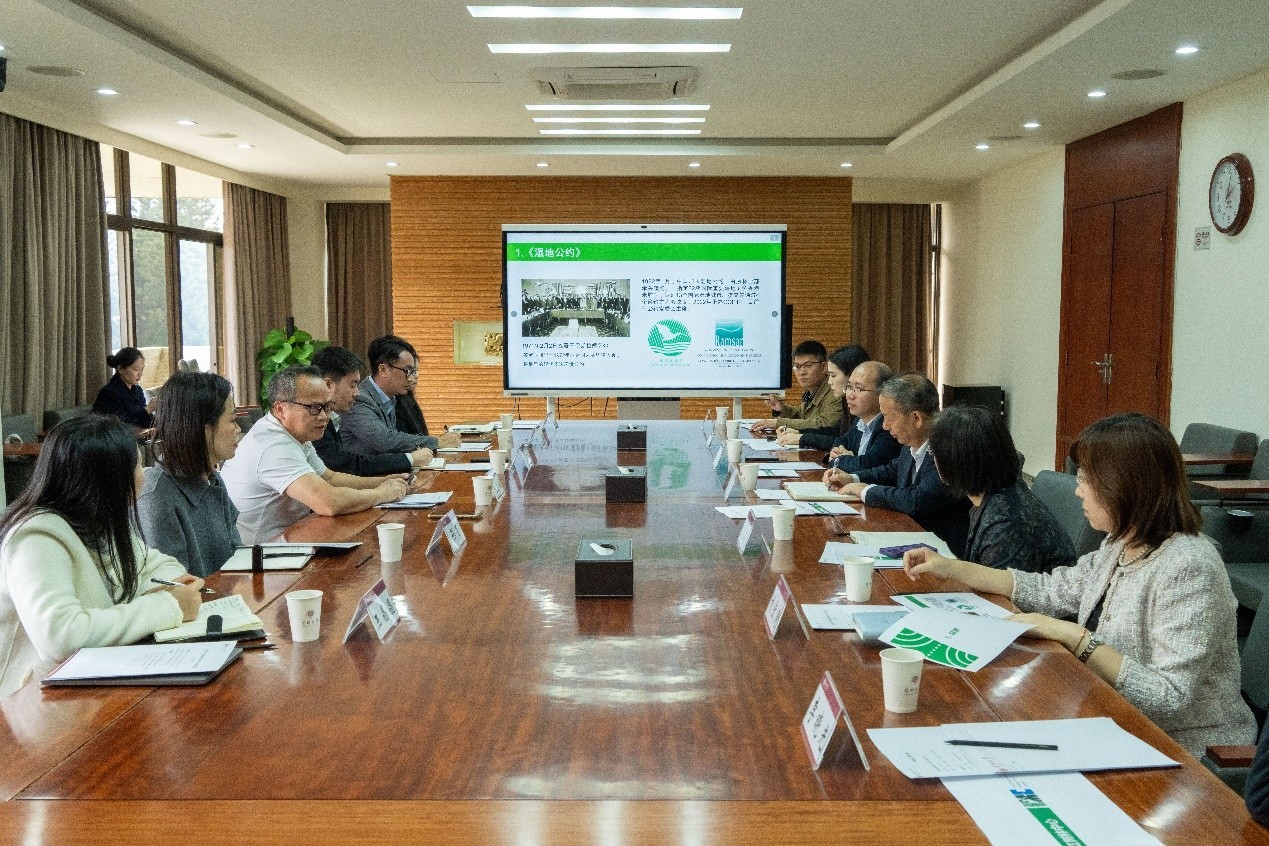
Collaborative discussion between the IMC and Shenzhen University
At the meeting, Prof. Bao Daming, Director General of the Interim Secretariat of the IMC, introduced the mission, objectives and organizational structure of the IMC, and pointed out that the IMC plans to actively develop member countries by 2030. He proposed that in the future, he looks forward to strengthening cooperation between the IMC and Shenzhen University in the fields of scientific research, technical support, and international exchanges, and jointly promoting the construction of the IMC and the global mangrove protection cause.
Mr. MAO Junfa, the President of Shenzhen University and an academician of the Chinese Academy of Sciences, stated that Shenzhen University has been continuously delving into ecological conservation and wetland research, and has accumulated rich scientific research achievements in the field of mangrove research. The school plans to build a mangrove ecosystem positioning observation and research station, a "Belt and Road" international joint laboratory, and a Shenzhen International Mangrove Wetland Research Center, and support and promote the construction and development of the IMC. He emphasized that Shenzhen University will leverage its advantages in talent cultivation, scientific research and international exchanges to further deepen strategic cooperation with the IMC and achieve mutual benefit and win-win results.
This exchange discussion reached to a solid foundation for the in-depth cooperation between the two sides in the future. Both sides unanimously expressed that they will continue to promote and implement the strategic cooperation agreement, join hands to explore innovative paths for the development of the IMC and mangrove conservation, and jointly contribute to the global ecological conservation cause.